
Completed Projects
Over the years, KISES has implemented several time-bound development projects across its operational areas, including Khammam Rural Mandal, Edurumondi Island (Nagayalanka Mandal), and Pedapatnam (Machilipatnam Mandal). These projects were designed to respond to urgent community needs, deliver practical solutions, and leave behind local capacity through committees, groups, and community leadership.
Below is a snapshot of KISES completed initiatives and what they achieved in the communities we serve.
Adult Literacy
KISES designed an adult literacy initiative to address a root barrier seen across Dalit and tribal hamlets: illiteracy and the lack of social awareness, which often keeps families trapped in poverty and exploitation. The programme began with ten literacy centres in ten villages of Khammam Rural Mandal and expanded to Dalit and tribal communities
What KISES did
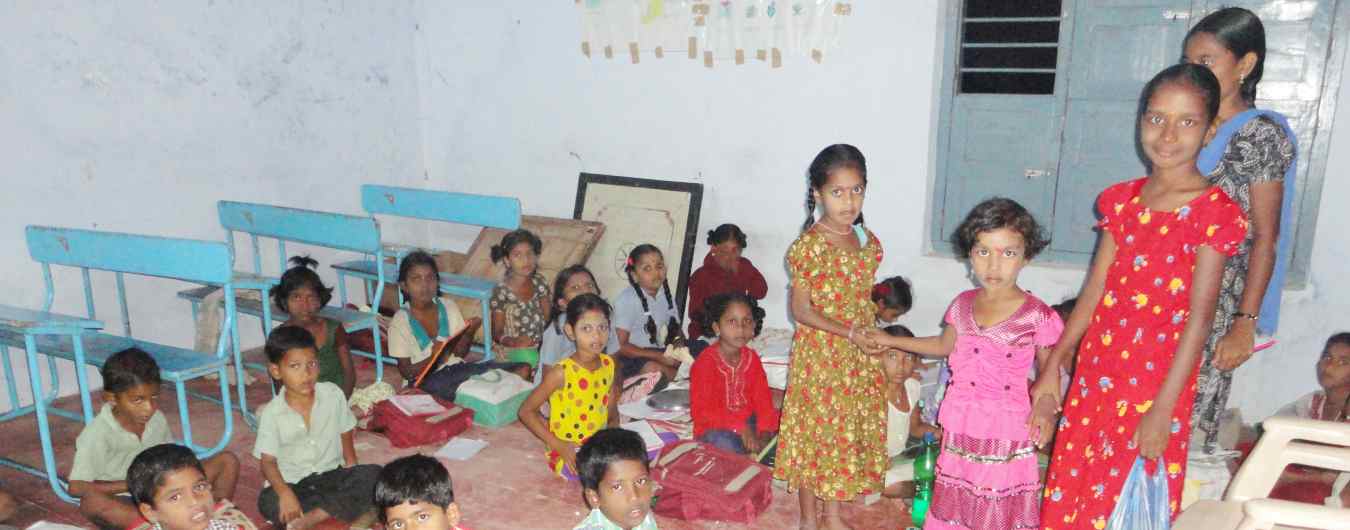
- Established 10 literacy centres and enabled adult learners to read and write, with participants progressing to reading school level books (Class 1 and Class 2).
- Made 300 Dalit and Lambadi women literate through the literacy centres.
- Ran continuous awareness programmes that contributed to a visible reduction in child marriages in the communities reached.
Supported mainstreaming of children into schooling by building parent awareness and enrolling nearly 75 children, including dropouts, into schools
Disaster Rehabilitation
- After the tsunami, KISES was among the first NGOs to reach Edurumondi Island. While many relief efforts were short-term, KISES stayed with the community to plan both immediate rehabilitation and longer-term development, working closely with local groups and village structures.
What KISES did
- Supported livelihood restoration by repairing 94 boats and fishing nets.
- Enabled safer housing by repairing 279 houses and constructing 225 houses.
- Improved sanitation by constructing 205 toilets.
- Strengthened household resilience through livelihood inputs: 256 buffaloes, 260 sheep, 1,500 chicks, and plantation support of 750 fruit trees.
MCH Health Programmes
KISES implemented Mother and Child Health interventions in Edurumondi Island villages to respond to the lack of accessible and regular health services for women and children. The approach focused on camps, preventive health, and timely referrals so families could address health issues before they became emergencies.
What KISES did
-
- Organised medical camps with a focus on antenatal and postnatal care, child health, and basic diagnostics and medicine support.
- Strengthened community awareness on hygiene, immunization, and safe health practices through regular outreach.
- Supported timely referral linkage for cases requiring further treatment, reducing delays that often become life-threatening in remote areas.
WASH Project
KISES implemented WASH interventions in the island villages with community participation, including Village Development Committees and Child Support Groups, to ensure hygiene practices and school sanitation were not just created but sustained.
What KISES did
-
- Constructed 328 household toilets to reduce open defecation and improve dignity and safety.
- Planted 350 coconut plants and 800 other plants to support a cleaner and greener village environment.
- Formed and strengthened children’s groups, school hygiene committees, and child support mechanisms so schools became champions of hygiene behaviour.
Vocational Training
To reduce dependency on traditional low-income occupations and improve women’s economic participation, KISES implemented vocational skill training for Dalit and Lambadi women, linking skills to practical income pathways.
What KISES did
-
- Provided vocational training to 160 Dalit and Lambadi women in tailoring, embroidery, toy making, and adda leaves making.
- Supported transition into self-employment and small businesses, helping women move away from traditional begging-based livelihoods.
- Built group capacity through training on formation, strengthening, and accountability of women’s groups to support long-term economic stability.
School Development
KISES invested in school infrastructure and child-led committees to make schools safer, more functional, and more engaging for children. The focus was not only construction, but also systems for maintenance and student participation so improvements lasted.
What KISES did
-
- Supported schools with teaching-learning materials and infrastructure needs such as play material, books, classroom furniture, safes, and racks.
- Constructed toilet facilities in all six schools, with three toilets in each school (boys, girls, staff).
- Formed school committees and student support groups for upkeep and development, with toilets maintained well even today due to active maintenance committees.
- Promoted school kitchen gardens through Child Support Groups to build nutrition awareness and practical learning.
Environmental Initiatives
Recognising the link between environment and public health in the island ecosystem, KISES carried out environment-focused awareness and community action in Edurumondi Island, addressing issues such as deforestation, indiscriminate cutting for firewood, and poor waste management.
What KISES did
-
- Conducted rallies, public meetings, competitions, and village awareness events to build environmental responsibility.
- Ran children’s rallies and discussions with women’s groups to connect environment with family well-being.
- Initiated community plantation where each family planted at least one sapling and protected it, including a culturally rooted practice of naming plants after loved ones to deepen care and ownership.
Edurumondi Island Development
Edurumondi Island has been a central operational geography for KISES, described as an area with limited facilities and basic amenities, where long-term engagement is essential for sustained change. KISES combined rehabilitation with multi-sector development and worked with community committees and school groups to implement programmes beyond relief.
What KISES did
- Stayed on the island beyond immediate relief, building community trust and long-term development planning.
- Implemented an integrated development approach including health programmes, sanitation, livelihoods, literacy, and school strengthening in collaboration with community structures.
- Supported school transformation through hygiene systems, child support groups, and kitchen garden initiatives that improved the school environment and community participation.
State, National, and International Partners
KISES has partnered with reputed agencies and worked closely with local institutions and government systems, reflecting strong implementation credibility and the ability to manage structured, accountable programmes.
International partners
- Tdh Foundation, Switzerland supported KISES MCH and WASH projects. organisational profile-2020
State and local level institutions and convergence partners
- Mandal Development Officer (Nagayalanka) and Village Development Committees supported community certification, participation, and local recognition of WASH work.
- Government officials and expert veterinary doctors supported training for beneficiaries in livestock care, strengthening sustainability of livelihood rehabilitation.
- Village Development Committees and school hygiene committees played a key role in monitoring sanitation adoption and sustaining behaviour change.
- Banks and formal financial systems were engaged through SHG bank linkages, enabling women’s groups to access credit for income generation.
KISES Impact Legacy
KISES completed projects have created a lasting legacy across communities by addressing root causes and building local systems that continue to function.
- Women’s empowerment through institutions: SHG formation and strengthening helped women improve decision making power, access credit, and shift toward dignified livelihoods.
- Literacy as a foundation for social change: adult literacy interventions enabled women to read and write, recognize the importance of education, and reduce harmful practices like child marriage through sustained awareness.
- Health and sanitation behaviours that sustain: WASH work built toilets and strengthened daily practices like handwashing, safe water handling, school hygiene routines, and community monitoring through VDCs and children’s groups.
- Post disaster resilience: rehabilitation work combined housing, sanitation, and livelihoods in a way that helped families rebuild stability and sustain incomes over time.
Looking Ahead
-
The experience from completed projects continues to guide KISES’s current and future design thinking, especially in coastal and underserved communities where poverty, vulnerability to disasters, and access barriers remain high.
KISES is positioned to build on this track record by:
- Scaling community institutions that work, such as women’s groups, VDCs, and child led systems, so communities sustain outcomes without external dependency.
- Strengthening integrated models that link health, sanitation, livelihoods, and education, because families experience these challenges together, not separately.
- Co designing larger CSR and agency partnerships based on proven implementation strengths, including multi village work, community participation frameworks, and structured monitoring through committees and schools.
If you are exploring a CSR partnership or a development programme collaboration, KISES can co design scalable interventions, deliver with community depth, and build sustainability systems that last.