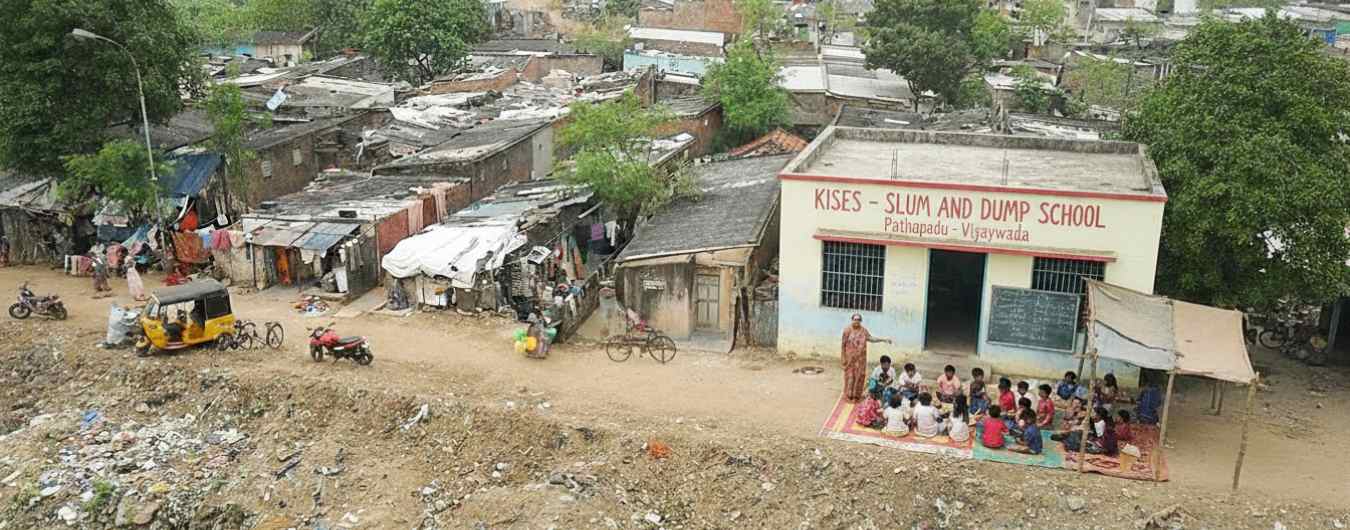
Slum & Dump School
In and around Vijayawada, many children grow up in slum colonies and near dumping sites where daily survival comes before schooling. Families that depend on rag-picking and daily-wage work often cannot afford uniforms, books, transport, or even the “lost income” when a child stops working and starts learning.
KISES runs the Slum and Dump School as a safe, consistent learning space where children receive basic education, life skills, nutritious meals, clean drinking water, and health support.
This project is designed for children who have never been to school, or who have dropped out early and are at high risk of child labour and exploitation.
Every day a child attends regularly is a step away from the dump, and a step closer to dignity, skills, and a future with choices. KISES invites individual donors and CSR partners to strengthen and scale this work through stable operational support and growth investments.
Why This Project Is Needed
Urban poverty creates a harsh reality for children living in informal settlements. Globally, hundreds of millions of children live in slums with limited access to safe water, sanitation, healthcare, and quality education, which directly affects attendance, nutrition, and learning outcomes.
In Andhra Pradesh, child and maternal nutrition challenges remain serious. State nutrition profiles based on NFHS data highlight high levels of anaemia among young children and women, along with persistent stunting among children under five, which can affect attention, immunity, and school readiness.
Child labour is another major risk when families face chronic debt and unstable incomes. UNICEF estimates that around 160 million children were in child labour globally at the beginning of 2020, with many in hazardous work that harms health and development.
This is why KISES focuses on a practical, daily solution: bring children into a structured learning environment, feed them well, teach hygiene and life skills, and reduce the pressures that push them back into labour.
Project Highlights
- A full-day school schedule from 9.30 am to 3.30 pm, built around consistent routine and care.
- Reaching children from multiple slum colonies and dump-linked families, with regular attendance often around 40 to 45 children and numbers approaching 50.
- Two teachers and an aya (cleaner/housekeeper) supporting the school and related outreach for dump children.
- Nutritious midday meals and clean drinking water as a daily anchor, improving health and attendance.
- Initial health screening identified common conditions (skin issues, breathing problems, stomach ailments) and a broad need for iron and vitamin supplements, linking education with basic health protection.
- Expansion potential to serve up to 100 children with adequate funding and spac
Objectives
- Provide grounding in education (Telugu and English).
- Prevent child labour and reduce school dropouts by building daily learning habits.
- Prevent exploitation by outsiders, including money lenders, and reduce trafficking risk.
- Reduce generational poverty by expanding future employment and life opportunities.
- Improve health and wellbeing through nutritious food, clean water, hygiene education, and basic health support.
Project Area / Geographical Coverage Area of Project
- Primary focus: Penamaluru mandal, on the outskirts of Vijayawada, where the KISES Slum School operates for children from surrounding slum colonies.
- Linked outreach: Vijayawada Municipal Dump area at Pathapadu, where dump families are reached through mobile-school style engagement as needed.
- The project depends on daily pick-up and drop for children from outlying colonies, which makes transport a critical operational need.
Beneficiaries / Target Population
- Children from slum colonies around Vijayawada who have never attended school or have dropped out early.
- Children from dump-linked families, including those exposed to hazardous work, poor nutrition, and unsafe living conditions.
- Vulnerable girls and boys at risk of exploitation, trafficking, and early entry into labour.
Key Components
- Safe learning space with a structured school day and supportive supervision.
- Foundational education in Telugu and English, with a strong focus on basics.
- Life skills education, especially personal hygiene and daily habits that protect health and dignity.
- Nutrition support: substantial midday meals and clean drinking water.
- Health linkages through periodic health checks and support for common deficiencies (iron and vitamins).
- Community trust-building with parents so attendance becomes regular, not occasional.
Activities
- Daily classes from morning to afternoon with age-appropriate foundational learning.
- Ongoing mobilization of children from multiple slum colonies to ensure consistent attendance.
- Hygiene education as a practical part of the school routine.
- Midday meal service and safe drinking water provision at school.
- Periodic health camps and follow-up support for common ailments and nutrition deficiencies.
- Outreach to dump-linked families through mobile-school style support when needed, benefiting families spread across the dumping site.
Expected Outcomes / Impact
KISES is already creating measurable change through the Slum and Dump School by running a full-day learning routine and keeping children engaged in a safe, structured environment. Daily attendance commonly remains around 40 to 45 children and can reach close to 50, supported by two teachers and an aya, which reflects growing trust from families in slum and dump-linked communities. Children receive nutritious midday meals and clean drinking water every day, and basic health screening has already helped identify common issues such as skin problems, breathing difficulties, and stomach ailments, along with a strong need for iron and vitamin supplements.
As the project continues, KISES aims to strengthen foundational learning in Telugu and English so children can transition into mainstream education pathways over time. By keeping children consistently in school and supported with food, hygiene habits, and health follow-ups, the program reduces the risk of child labour and exploitation, including trafficking threats, while building the long-term foundation for dignity, safety, and future livelihoods.
Partners
- Local community members and slum families who support enrolment and regular attendance as trust grows.
- Support networks and friends of KISES who help mobilize resources and visibility for the project.
- Linkage learning from partners providing residential education pathways, which inspires the project’s long-term vision for children’s futures.
Looking Forward / Future Plans
- Secure reliable daily transport so children can be safely collected from outlying colonies and returned home each evening.
- Strengthen the operational stability of the school by sustaining teacher salaries, rent, meals, and learning materials.
- Work towards a larger, more permanent learning and care space, with the longer-term possibility of a hostel model that reduces the daily harm of returning to unsafe, unhygienic conditions at night.
- Expand capacity gradually so more children from additional slum colonies can be enrolled, aiming towards a scale of up to 100 children with adequate support.
Conclusion
- The Slum and Dump School is KISES’s practical answer to an urgent question: what happens to a child when poverty decides their future before they even enter a classroom? In Penamaluru and the dump-linked communities of Vijayawada, KISES is proving that a safe learning space, daily nutrition, hygiene, and steady care can turn despair into discipline, and discipline into opportunity.
- Support this project. Partner with us. Your contribution helps a child step out of hazardous work, into education, and into a life with choices.
How You Can Support (CSR & Individual Donors)
- Sponsor transport: fund a dedicated school minibus and running costs (driver, fuel, insurance, maintenance). Corporate branding on the vehicle can be supported if required.
- Sponsor meals: help cover the monthly cost of feeding a child at the school (example cost shared: Rs.30 per child per month).
- Sponsor teachers: support competitive, stable salaries to retain committed teachers working with highly vulnerable children.
- Sponsor school operations: contribute toward monthly rent and essential running costs that keep the school open daily.
- Provide school supplies: books, slates, uniforms, footwear, hygiene kits, sports and learning materials, and child-friendly educational tools.
- Fund health support: sponsor periodic health camps, basic medicines, and nutrition supplements like iron and vitamins for children identified with deficiencies.
- Sponsor clothing and dignity kits: many children arrive with almost no clothing, and basics can change attendance and self-worth immediately.
- CSR partnerships for growth: support expansion toward a larger permanent facility and a hostel-linked model that provides safer, healthier learning continuity.
- In-kind CSR support: donate refurbished computers, smart learning screens, desks, water filters, first-aid supplies, or periodic employee-volunteering sessions for mentoring and life skills.