Micro Lending Program
KISES believes that when women gain economic freedom and social confidence, the whole family moves forward. In many low income communities, women carry the maximum responsibility but have the least control over income, decisions, and opportunities. Low literacy, lack of skills, limited access to banks, and social barriers keep women dependent, even when they are hardworking and capable.
Through this ongoing Women Empowerment project, KISES works with Dalit and tribal women, including Lambadi communities, to build practical skills, financial access, and leadership. The focus is simple and powerful: help women become confident earners, informed decision makers, and respected leaders in their families and communities.
Why This Project Is Needed
In underserved rural and peri urban pockets, women often remain outside formal financial systems. Even when they want to start a small business, they struggle to access affordable credit, understand banking processes, or build confidence to manage money independently. This keeps families trapped in cycles of low and unstable income.
Another everyday barrier is education. When women cannot read basic text or handle simple records, they face dependency in banking, healthcare, and schooling decisions. KISES addresses this through adult literacy support linked with livelihoods, so learning becomes immediately useful in daily life.
KISES has also observed that economic stress and low awareness can fuel harmful practices, including early marriage decisions and substance addiction in communities. By strengthening women groups, promoting thrift, and running awareness and leadership sessions, women start influencing decisions at home and in the community.
Project Highlights
- 300 Dalit and Lambadi women supported through adult literacy interventions linked with women empowerment.
- 10 literacy centres established to enable women to read, learn, and support their children’s education more confidently.
- 150 Self Help Groups formed with 1500 members, with bank linkages and access to loans for income generation.
- Bank linkages enabled SHGs to access approximately ₹1.5 crore in credit for petty businesses and livelihoods.
- 160 Dalit and Lambadi women trained in livelihood skills like tailoring, embroidery, toy making and adda leaves making for self employment.
- Women leadership strengthened through regular trainings, capacity building, and focused awareness camps for SHG leaders.
Objectives
- Build women’s economic independence through Self Help Groups, thrift, credit access, and small livelihood enterprises.
- Strengthen women’s confidence and decision making power in family and community life.
- Provide vocational skills that create local income options and reduce dependency on unstable livelihoods.
- Improve functional literacy so women can handle basic records, engage with institutions, and support children’s education.
- Create awareness on health, hygiene, environmental cleanliness, and access to government schemes that benefit women and families.
Project Area / Geographical Coverage Area of Project
- KISES implements women empowerment interventions in its priority communities across Khammam District and Krishna District, with field level community mobilisation and group strengthening in target villages and habitations.
- The approach is village based and group based, ensuring regular follow up through women groups and community processes, rather than one time activities.
Beneficiaries / Target Population
- Dalit women and tribal women, including Lambadi communities, especially women with limited literacy and low income options.
- Women organised into SHGs for savings, internal lending, and bank linkage based livelihoods.
- School dropout girls and unemployed youth linked to tailoring centres and livelihood support.
Key Components
- Formation and strengthening of Self Help Groups for savings, collective decision making, and livelihood planning.
- Bank linkages and credit access, helping women move from informal borrowing to structured, affordable loans.
- Capacity building and leadership training to run meetings, write minutes, identify issues, and take action collectively.
- Vocational training in locally relevant skills for self employment and home based income opportunities.
- Adult literacy support through literacy centres, enabling functional reading and confidence in daily life.
- Awareness building on health, hygiene, environmental cleanliness, superstition reduction, alcoholism reduction, and government schemes.
Activities
- Organising women into SHGs and supporting group discipline, savings habits, and collective responsibility.
- Facilitating bank linkages and guiding groups through processes to access credit for income generating activities.
- Conducting regular trainings for SHG members on meeting processes, record keeping, minutes writing, and accountability.
- Running vocational training sessions in skills such as tailoring, embroidery, toy making, candle making, bag making, and adda leaves making.
- Supporting tailoring centres for school dropout girls and unemployed youth, including access to machines after training where applicable.
- Organising awareness camps and leadership motivation sessions to help women take up community leadership roles and address women issues.
Expected Outcomes / Impact
This project is already creating visible, grounded change and continues to expand that change year after year.
-
- Women’s financial inclusion has strengthened through SHG formation and bank linkages, with SHGs accessing approximately ₹1.5 crore in credit and using it for petty businesses and income generation.
- Women have moved towards dignified livelihoods, including communities where begging was a traditional occupation, by taking up small businesses through SHG support.
- Skills training has helped women become earners, with 160 Dalit and Lambadi women trained in practical trades that enable self employment and home based income.
- Women’s confidence and decision making has improved through capacity building, meeting skills, record keeping, and leadership development within groups.
- Functional literacy improvements have helped women read basic school level materials and encouraged families to support children’s schooling.
- Women leaders are increasingly taking women’s issues forward and seeking support from government systems to resolve them, showing stronger community leadership.
- Continued outcomes as the programme strengthens: more women led enterprises, stronger group federations, higher household stability, and more women participating in local decision making processes.
Partners
- Self Help Groups and community women leaders who drive group discipline and local problem solving.
- Local banks and formal financial institutions enabling SHG credit linkages.
- Government schemes accessed through awareness and facilitation, including low-interest credit linkages where applicable.
Partner Spotlight: The NEO Fund
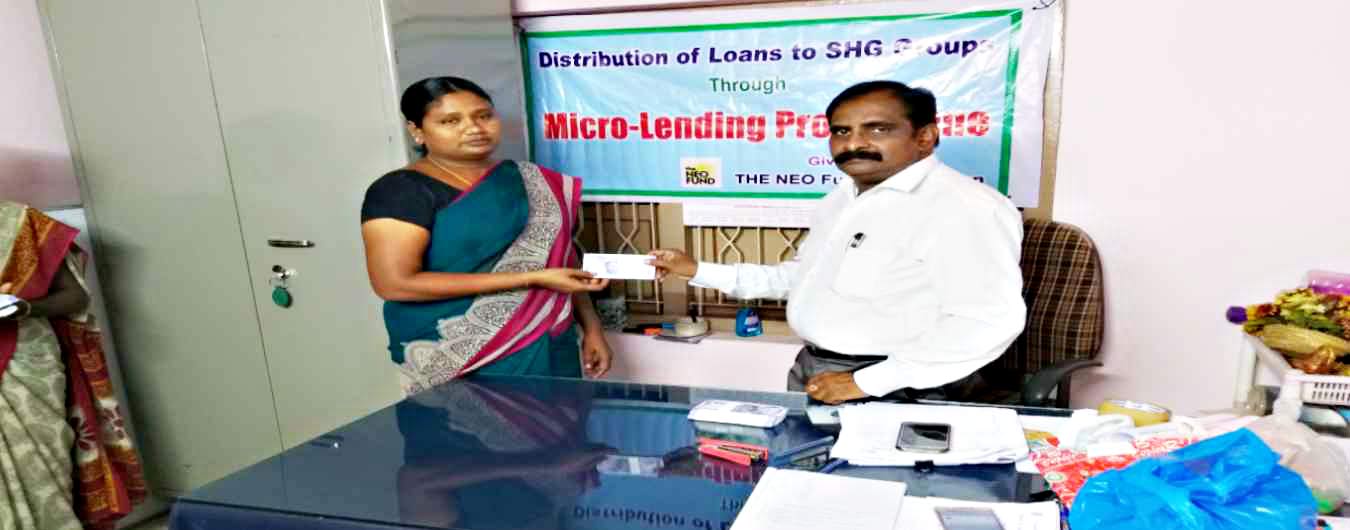
We are deeply grateful for our collaboration with The NEO Fund, which began in 2019 with a pilot microloan initiative in underserved villages near Vijayawada.
“What started with 30 women has now expanded tenfold. Today, our program supports 300 women across 10 self-help groups. Over six years, our dedicated local team has facilitated over 2,000 loans totaling $300,000, along with ongoing mentorship and training. These are not donations—they’re investments in women who repay their loans and reinvest in their families and communities.
The impact is clear: stronger local economies, improved family nutrition, greater financial stability, and a growing sense of hope and self-determination among borrowers.”
— The NEO Fund (Read the full story here)
This partnership has enabled remarkable growth, turning small loans into lasting empowerment for women in Andhra Pradesh. Building on this success, The NEO Fund has established NEO Fund India to further expand microlending in the region.
This testimonial reflects the shared journey and scaled impact of our joint efforts in women’s economic empowerment.
Looking Forward / Future Plans
KISES is strengthening this ongoing work by going deeper in the same communities and widening opportunities for women to grow as entrepreneurs and leaders. The focus ahead includes:
-
- Deepening SHG capacity building so women manage stronger systems of savings, internal lending, records, and group governance.
- Expanding livelihood options by adding more skill training batches and linking women to better local markets for their products and services.
- Strengthening women leadership so more women can confidently address issues like early marriage, alcohol related harm, health awareness, and access to entitlements.
- Improving monitoring and learning so impact stories, group progress, and livelihoods growth are documented consistently and shared with supporters in a transparent way.
Conclusion
- Women empowerment is not a one time activity, it is a steady process of building confidence, skills, and dignity. KISES continues this work because it directly improves family stability, children’s education, and community wellbeing. When a woman earns with confidence and participates in decisions, the whole household becomes stronger, and the next generation gets a better chance.
- Support this project or partner with us to expand women’s livelihoods, leadership, and dignity across KISES communities.
How You Can Support (CSR & Individual Donors)
- Sponsor vocational training for women in skills like tailoring, embroidery, toy making, candle making, bag making, and adda leaves making.
- Fund tailoring centres and skill labs, including training materials and essential equipment support.
- Support SHG capacity building workshops on leadership, record keeping, meeting processes, and accountability.
- Enable women led micro enterprises with working capital support linked to SHG plans and local livelihoods.
- Sponsor adult literacy support through community learning centres that build functional literacy and confidence.
- Support awareness and behaviour change initiatives on health, hygiene, environmental cleanliness, and access to government schemes.
- Fund community leadership camps for women leaders to solve local women issues and strengthen collective action.
- CSR partnership for a cluster of villages, covering SHG strengthening, livelihoods training, and leadership development as an integrated model.