Child Sponsorship
In Khammam and Krishna districts, many children grow up without the protection of stable parents, regular income, or a safe learning environment. When a family is pushed into crisis by death of a parent, illness, or a major coastal disaster, the first casualty is often the child’s education. School becomes irregular, nutrition becomes uncertain, and children become vulnerable to child labour and exploitation.
KISES runs an ongoing Child Sponsorship Programme to protect these children at the most critical stage of life. Through sustained sponsorship support, KISES helps children stay enrolled in school, continue from class to class without breaks, and grow up with dignity, care, and a sense of belonging. This is not only about paying for education. It is about rebuilding a child’s daily life with safety, motivation, and hope.
If you are an individual donor or a CSR partner, this is a high-impact, human-centred project where support directly translates into a child staying in school and moving towards a better future.
Why This Project Is Needed
Across Andhra Pradesh and Telangana, child health and household vulnerability remain a serious concern, and these pressures often show up as school dropouts and child labour in low-income communities. NFHS-5 reports that in Andhra Pradesh, 31.4 percent of children under five are stunted and 58.6 percent of children aged 6 to 59 months are anaemic. In Telangana, 33.1 percent of children under five are stunted and 55.0 percent of children aged 6 to 59 months are anaemic.
For families already living on the edge, frequent illness, undernutrition, and healthcare costs reduce household stability and make it harder to keep children learning consistently. When parents are struggling for daily wages, even small education expenses, transport costs, or the need for an older child to “help earn” can disrupt schooling.
Krishna district is also part of a coastal belt that is repeatedly exposed to hazards like cyclones and floods, which can damage homes, disrupt livelihoods, and intensify stress on children’s education and wellbeing
Project Highlights
- Ongoing child sponsorship support implemented in Khammam and Krishna districts.
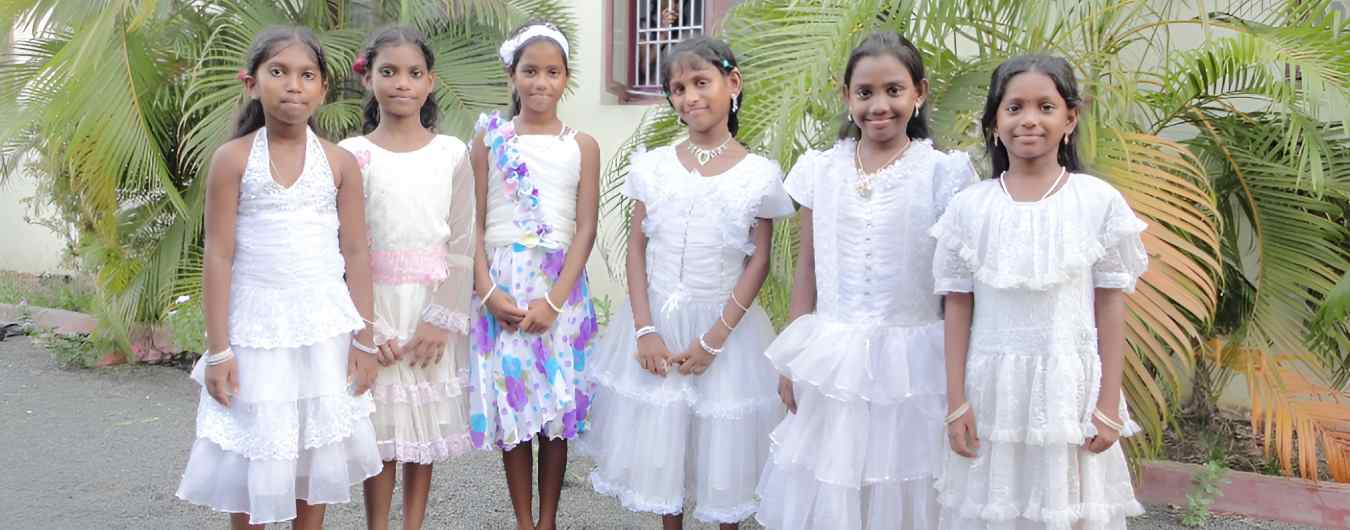
- KISES has extended its helping hand to 75 orphan children under the sponsorship programme.
- 55 orphan children have been enrolled in schools across different classes, with support continuing until they reach Class 10.
- Children supported range from Class 1 through Class 10, studying in different locations across both districts.
- Selection approach is need-based: in Khammam, children who lost both parents are prioritised; in Krishna, children directly affected by coastal disasters are included along with orphaned children.
- Beyond schooling, KISES creates a “family-like” environment through regular cultural activities, celebration of birthdays, and motivation through prizes for academic performance.
- School uniforms have also been distributed to 150 children from poor families.
Objectives
- Protect vulnerable children from dropping out of school and being pushed into child labour or unsafe environments.
- Provide parental care and economic security through steady sponsorship support, so children can grow with dignity and stability.
- Ensure continuity of education up to Class 10 as a minimum foundation, and strengthen pathways for higher education where possible.
- Build confidence, motivation, and emotional wellbeing through a supportive community environment.
Project Area / Geographical Coverage Area of Project
- Khammam District (selection prioritises children who have lost both parents).
- Krishna District (selection includes children directly impacted by coastal disasters along with orphaned children).
Children are enrolled in schools across various locations within these districts, based on where they live and where schooling is accessible for them
Beneficiaries / Target Population
- Orphan children and children from highly vulnerable families across Khammam and Krishna districts.
- Children studying from Class 1 to Class 10, where sustained sponsorship is critical to prevent discontinuation.
- Poor children needing basic education support like uniforms and learning continuity.
Key Components
- Child identification and selection based on vulnerability criteria suited to each district context.
- School admission and continuity support so children do not discontinue education mid-way.
- Care and protection support including food and shelter supportwhere needed, to stabilise the child’s living conditions.
- Emotional wellbeing and motivation through regular cultural programmes, celebrations, and recognition for academic effort.
- Practical support for vulnerable children such as distribution of school uniforms for children from poor families.
Activities
- Identify and sponsor children based on clear vulnerability criteria in Khammam and Krishna districts.
- Ensure enrolment and continued schooling across classes, with support sustained up to Class 10 as a minimum education foundation.
- Provide stabilisation support such as food and shelter assistance, to protect children from neglect and insecurity.
- Run regular cultural programmes that help children overcome loneliness and build unity and belonging.
- Organise special programmes on feast days and important occasions to strengthen emotional wellbeing and community bonding.
- Recognise academic performance with special prizes to encourage consistent learning and confidence.
- Celebrate each child’s birthday in a joyful community atmosphere so children feel valued and seen.
- Distribute school uniforms to children from poor families to improve dignity and school participation.
Expected Outcomes / Impact
- KISES is already achieving strong, visible outcomes through this programme, and continues to deepen the impact as the project expands and strengthens.
- Children remain enrolled and continue their education consistently, instead of discontinuing due to vulnerability or economic stress.
- KISES has extended sponsorship support to 75 orphan children, and has supported school admission and continuation for 55 orphan children across classes up to Class 10.
- Children experience improved emotional wellbeing and stability through daily cultural engagement, community celebrations, and encouragement for learning.
- Families and communities see tangible relief when education costs are stabilised, reducing pressure that can otherwise push children into child labour or unsafe pathways.
- As the programme continues, KISES aims to increase pathways into higher education through support from generous donors, so that children do not stop at Class 10 but move towards long-term independence.
Partners
- Individual donors and well-wishers who make sponsorship support possible, including those who enable continued education beyond the basic level.
- Local communities that participate in celebrations and create a supportive environment for children.
- Schools and local education stakeholders across Khammam and Krishna districts, where children are enrolled and supported to continue learning.
Looking Forward / Future Plans
- Strengthen the sponsorship model so more vulnerable children can be included on an ongoing basis in both districts.
- Build stronger higher-education support pathways, so motivated children can continue beyond Class 10 and pursue college or vocational routes.
- Improve continuity support through better follow-up with families and schools, so children facing risk of dropout can be supported early.
Conclusion
- Child sponsorship is one of the most direct and meaningful ways to break the cycle of poverty and vulnerability. When a child is protected, supported, and kept in school consistently, it changes not only that child’s life but also the future of the family and community around them.
- KISES continues this programme as an ongoing commitment in Khammam and Krishna districts, ensuring that children who are most at risk are not left behind. Support this project. Partner with us to keep children safe, learning, and hopeful
How You Can Support (CSR & Individual Donors)
- Sponsor a child’s education support to ensure continuous schooling from one class to the next.
- Support school essentials kits: notebooks, bags, stationery, learning materials, and exam support.
- Sponsor uniforms and basic dignity support for children from poor families (KISES already distributes uniforms and aims to expand this).
- Fund nutrition and care support that stabilises children’s daily life, so learning becomes possible and consistent.
- Support higher education pathways for sponsored children after Class 10, including scholarships, college fees, or vocational training support.
- CSR partnership to sponsor a cohort of children in a defined geography (Khammam or Krishna), with clear reporting and storytelling outcomes.
- CSR support forchild wellbeing activities: mentoring, cultural programmes, learning motivation, and community celebrations that build belonging.
- Employee volunteering and mentoring support (career exposure, motivation sessions, learning encouragement) aligned to a child’s grade level.
- Matching-giftprogrammes and recurring giving to make sponsorship sustainable and predictable for children and schools.